Fashion Clothes Retailer Blog Resources Links Inurl:links Intitle:industry
Can fashion e'er exist sustainable?
(Image credit:
Alamy/Javier Hirschfeld
)
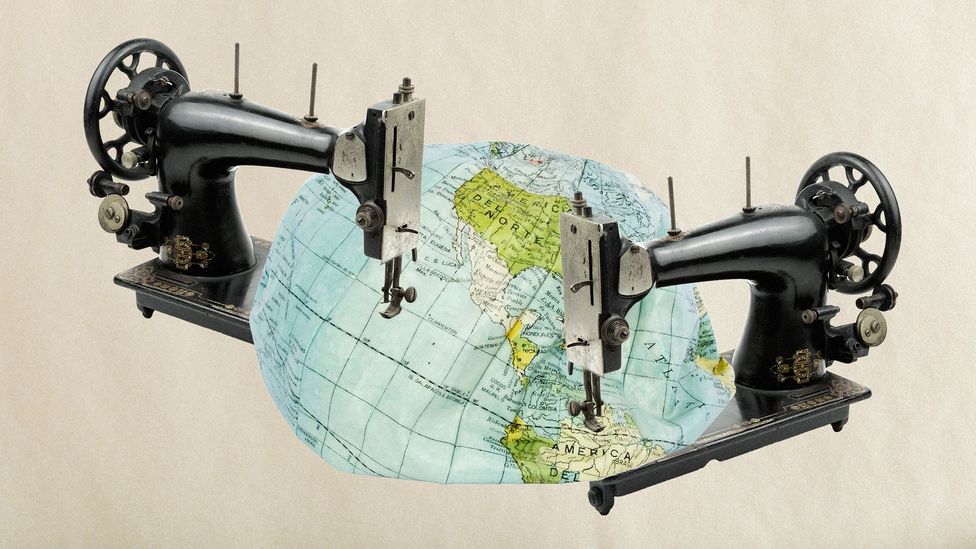
Way accounts for around 10% of greenhouse gas emissions from homo action, but there are means to reduce the impact your wardrobe has on the climate.

"For years I was obsessed with buying dress," says Snezhina Piskova. "I would buy 10 pairs of very cheap jeans just for the sake of having more multifariousness in my wardrobe for a low cost, fifty-fifty though I ended up wearing only two or iii of them."
When information technology comes to resisting the lure of fashion, Piskova faces a tougher challenge than near. Every bit a copywriter for a company in the mode manufacture she's surrounded by fashionistas. And information technology's been piece of cake to continue with the tide.
Simply conversations about the climate crisis fabricated Piskova, who lives in Sofia, Bulgaria, consider the touch on that the manufacture and her own shopping habits were having.
The fashion industry accounts for nigh 8-10% of global carbon emissions, and nearly 20% of wastewater. And while the ecology impact of flying is at present well known, style sucks up more energy than both aviation and shipping combined.
Yous might also like:
● Should y'all go on a "flying diet"?
● Why your bin is a climate problem
● The surprising price of being online
Clothing in general has complex supply bondage that makes it hard to business relationship for all of the emissions that come up from producing a pair of trousers or new coat. Then there is how the vesture is transported and tending of when the consumer no longer wants information technology anymore.
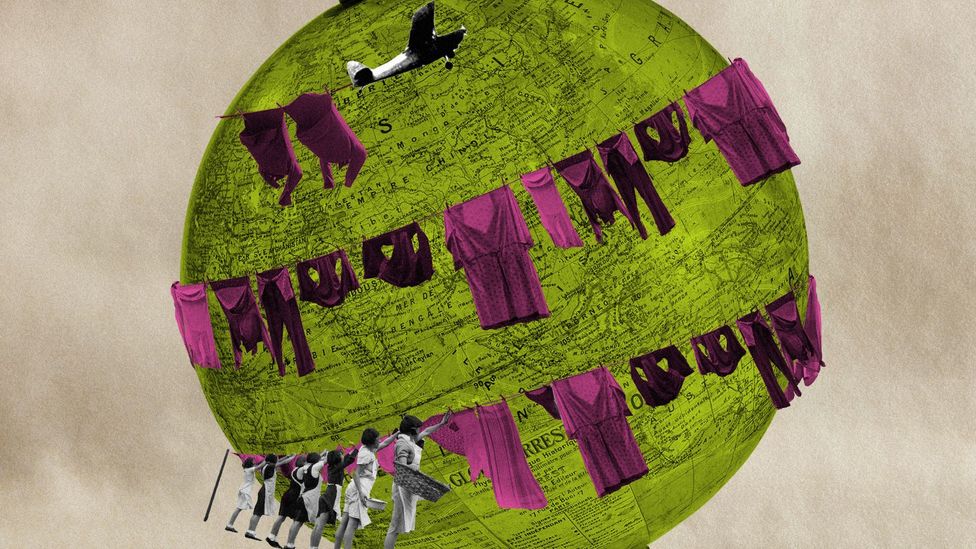
The style industry is responsible for more carbon emissions than those that come up from aviation (Credit: Getty Images/Alamy/Javier Hirschfeld)
While most consumer appurtenances suffer from similar issues, what makes the fashion industry especially problematic is the corybantic pace of alter it not just undergoes, but encourages. With each passing season (or microseason), consumers are pushed into ownership the latest items to stay on trend.
It'due south hard to visualise all of the inputs that go into producing garments, simply let's take denim as an example. The UN estimates that a single pair of jeans requires a kilogram of cotton. And because cotton wool tends to exist grown in dry out environments, producing this kilo requires about 7,500–10,000 litres of water. That'due south virtually 10 years' worth of drinking h2o for one person.
There are means to make denim less resource-intensive, just in general, jeans composed of fabric that is every bit close to the natural state of cotton wool as possible utilise less water and hazardous treatments to produce. This means less bleaching, less sandblasting, and less pre-washing.
Unfortunately it also means that some of the well-nigh popular types of jeans are the hardest on the planet. For instance, fabric dyes pollute water bodies, with devastating effects on aquatic life and drinking water. And the stretchy elastane textile woven through many trendy styles of tight jeans is made using synthetic materials derived from plastic, which reduces recyclability and increases the environmental impact further.
Jeans manufacturer Levi Strauss estimates that a pair of its iconic 501 jeans will produce the equivalent of 33.4kg of carbon dioxide equivalent across its entire lifespan – about the same as driving 69 miles in the boilerplate U.s.a. car. Just over a third of those emissions come from the fibre and fabric production, while another viii% is from cut, sewing and finishing the jeans. Packaging, ship and retail accounts for sixteen% of the emissions while the remaining 40% is from consumer utilise – mainly from washing the jeans – and disposal in landfill.
Some other study of jeans made in India that contained 2% elastane showed that producing the fibres and denim fabric released 7kg more carbon than those in Levi'due south assay. Information technology suggests that choosing raw denim products volition have less touch on on the climate.
Merely information technology is also possible to look for further ways of reducing the impact of your jeans by looking at the label. Certification programmes like the Better Cotton Initiative and Global Organic Textile Standard can help consumers work out how green their denim is (although these programmes aren't perfect – many suffer from a lack of funding and the complex supply bondage for cotton can make it hard to business relationship where it all comes from).

Growing the cotton needed for a single pair of jeans requires a huge amount of water, while dying and manufacturing processes apply withal more (Credit: Getty Images/Javier Hirschfeld)
Some manufacturers are likewise working on ways to reduce the ecology impact from the product of their jeans, while others accept been developing ways of recycling denim or fifty-fifty jeans that will decompose within a few months when composted.
It's non cotton, but the constructed polymer polyester that is the most mutual fabric used in wearable. Globally, "65% of the vesture that we wear is polymer-based", says Lynn Wilson, an expert on the circular economy, who for her PhD research at the University of Glasgow is focusing on consumer behaviour related to clothing disposal.
Around 70 million barrels of oil a year are used to make polyester fibres in our apparel. From waterproof jackets to fragile scarves, information technology's extremely hard to get away from the stuff. Part of this stems from the convenience – polyester is easy to clean and durable. It is also lightweight and inexpensive.
But a shirt made from polyester has double the carbon footprint compared to one made from cotton. A polyester shirt produces the equivalent of v.5kg of carbon dioxide compared to 2.1kg from a cotton fiber shirt.

Swapping apparel with friends tin refresh your wardrobe and bring an interesting new dimension to your friendship (Credit: Getty Images/Javier Hirschfeld)
A uncomplicated mode to reduce the footprint from online shopping then is to only order what we really want and intend to keep. According to the World Bank, 40% of wearable purchased in some countries is never used.
Piskova has tried to move away from the fast way civilisation herself past learning to appreciate what she already has rather than what she could take. But detaching herself from a fashion-obsessed mindset hasn't been easy. To assistance, Piskova resists going to places where she feels pressure level to swallow, such as shopping malls. She also periodically swaps clothes with her friends, which not simply allows them to refresh their ain wardrobes but too helps them feel closer to each other. And she has as well learned to embrace small blemishes on her clothes, rather than seeing these every bit an excuse to buy more.
"People are and so careful with their apparel, like to not accept whatsoever scratches on them or have any holes or whatever," says Piskova. "But and then when you think about it, that'south part of the clothes. Y'all call back that one fourth dimension when yous went to a festival, where y'all ripped your shirt or something like that, and information technology's a nice retention."
The number of times you habiliment an particular of clothing tin brand a big difference too in its overall carbon footprint. Research by scientists at the Chalmers Institute of Technology in Gothenburg, Sweden, found that an average cotton t-shirt might release just over 2kg of carbon dioxide equivalent into the atmosphere while a polyester dress would release the equivalent of nearly 17kg of carbon dioxide.

Sometimes the best way to reduce the bear on your fashion choices accept on the environment is break costless of the herd (Credit: Getty Images/Javier Hirschfeld)
They estimated, however, that the boilerplate t-shirt in Sweden is worn around 22 times in a year, while the average wearing apparel is worn just 10 times. This would mean the amount of carbon released per vesture is many times higher for the dress.
Co-ordinate to the Ellen MacArthur Foundation, the boilerplate number of times a piece of clothing is worn decreased by 36% betwixt 2000 and 2015. In the same period, clothing production doubled. These gains came at the expense of the quality and longevity of the garments.
A number of public surveys also suggest that many of us accept clothes in our wardrobes that we hardly e'er article of clothing. According to ane survey, nearly half of the clothes in the boilerplate UK person's wardrobe are never worn, primarily because they no longer fit or take gone out of style. Another found that a 5th of the items owned by US consumers are unworn.
Information technology is clear that investing in college-quality clothing, wearing them more often and property onto them for longer, is the not-and so-secret weapon for combatting the carbon footprint from your garments. In the U.k., standing to actively wear a garment for but nine months longer could diminish its environmental impacts by twenty–thirty%.
Naturally, some clothing companies have sniffed out an opportunity here. Vesture rental services, for case, are especially appealing in a social-media era where some people are reluctant to be seen online wearing the same outfit more than than once. For those who want to look good in their online photos just take even less of an impact on the environment, at that place is the ephemeral trend for digital style, or clothing designed to only appear online by being superimposed onto your images.
Buying less also means caring for wearing apparel more than. Websites like Beloved Your Wearing apparel, fix by U.k. recycling charity WRAP, offer tips on repairing and extending the life of clothes, which can reduce the carbon footprint of the clothes.
Merely tackling the underlying reasons for why we over-buy, yet underuse, wearing apparel could likewise assist. In a consumerist society, people are trained to find fast way pleasurable and addictive.
"A lot of the things that nosotros purchase fulfil some kind of function in ourselves – particularly way items," says Mike Kyrios, a clinical psychologist who researches mental disorders at Australia's Flinders University. People who take lower self-esteem or worry about their status are especially likely to use overspending as a road to feel like they "belong", he explains. As are people who are sensitive to rewards – indeed the reward centres in the brain are those most activated by impulse shopping.
Online shopping also means that the impulse to purchase is harder to control, every bit net stores are open 24/7 – including, as Kyrios says, the times "when your controlling capabilities are at their minimum".
Though estimates vary, one is that about 5% of the population exhibits compulsive buying behaviour. "The problem is it'south well hidden," says Kyrios. "People don't prove up for handling, people don't acknowledge it'due south a problem."
One solution might be to simply ration the fourth dimension you lot spend looking at clothes online, only perhaps a better approach is to find less wasteful ways of achieving the sense of reward that over-spenders are seeking. Mainstream consumers can scratch their itch for new clothes past buying from vintage and secondhand clothing shops.
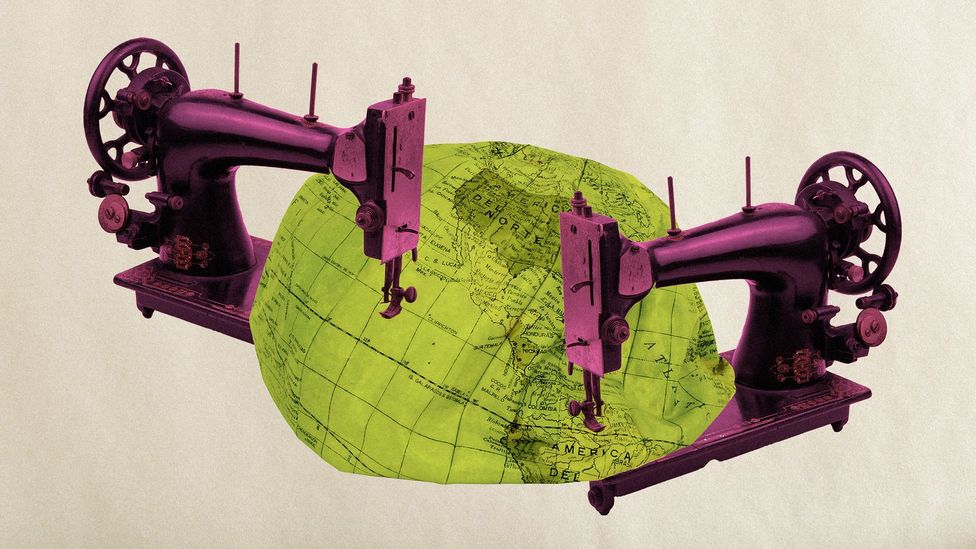
Wearing our garments for even just a few months longer can reduce the impact they take on the planet (Credit: Alamy/Javier Hirschfeld)
"Secondhand clothing is giving clothes a second life and it's slowing down that fast-way bicycle," says Fee Gilfeather, a sustainable style expert at clemency Oxfam. "So I would say secondhand (wearable) is actually one of the solutions to the overconsumption challenge."
Cut downward on washing tin also aid to further reduce the carbon footprint of your wardrobe, while also helping to lower water employ and the number of microfibres shed in the washing car.
"You don't need to wash clothes every bit ofttimes every bit you might retrieve," says Gilfeather. She hangs some of her dresses out to air, for example, rather than washing them later each wear. "Reducing the corporeality of washing that y'all need to practise is the best style of making certain that the plastics don't get into the water system."
How you dispose of the dress at the end of their useful life is likewise important. Throwing them abroad so they end up in landfill or being incinerated only leads to more emissions. Perhaps the best approach is to pass them on to friends or accept them to charity shops if they are still good enough to be worn. Notwithstanding, individuals should exist careful not to use this every bit a mode of clearing space simply to buy new dress, which Wilson'south research suggests is common.
Where clothing has been worn or damaged beyond repair, the most environmentally sound way of disposing them is to send them for recycling. Clothing recycling is still relatively new for many fabrics merely increasingly cotton and polyester wearable can now be turned into new clothes or other items. Some major manufacturers take now started using recycled fabrics, but it is often hard for consumers to find places to have their old clothes.
Many of the changes needed to make clothing more sustainable have to be implemented by the manufacturers and big companies that control the fashion industry. But as consumers the changes we all make in our behaviour not only add up, simply tin drive change in the industry, besides.
Co-ordinate to Gilfeather, nosotros can all make a difference past being more thoughtful as consumers.
--
Smart Guide to Climate Change
For virtually BBC Futurity readers, the question of whether climate change is happening is no longer something that needs to exist asked. Instead, in that location is now growing business organisation well-nigh what each of us as individuals can do about information technology. This new series, our Smart Guide to Climate Change, uses scientific research and data to pause down the nearly effective strategies each of us tin take to shrink our carbon footprint.
--
Join i million Future fans by liking us on Facebook , or follow usa on Twitter or Instagram .
If y'all liked this story, sign up for the weekly bbc.com features newsletter , called "The Essential List". A handpicked pick of stories from BBC Futurity, Civilisation, Worklife, and Travel, delivered to your inbox every Fri.
0 Response to "Fashion Clothes Retailer Blog Resources Links Inurl:links Intitle:industry"
Post a Comment